
Curtain Wall Section
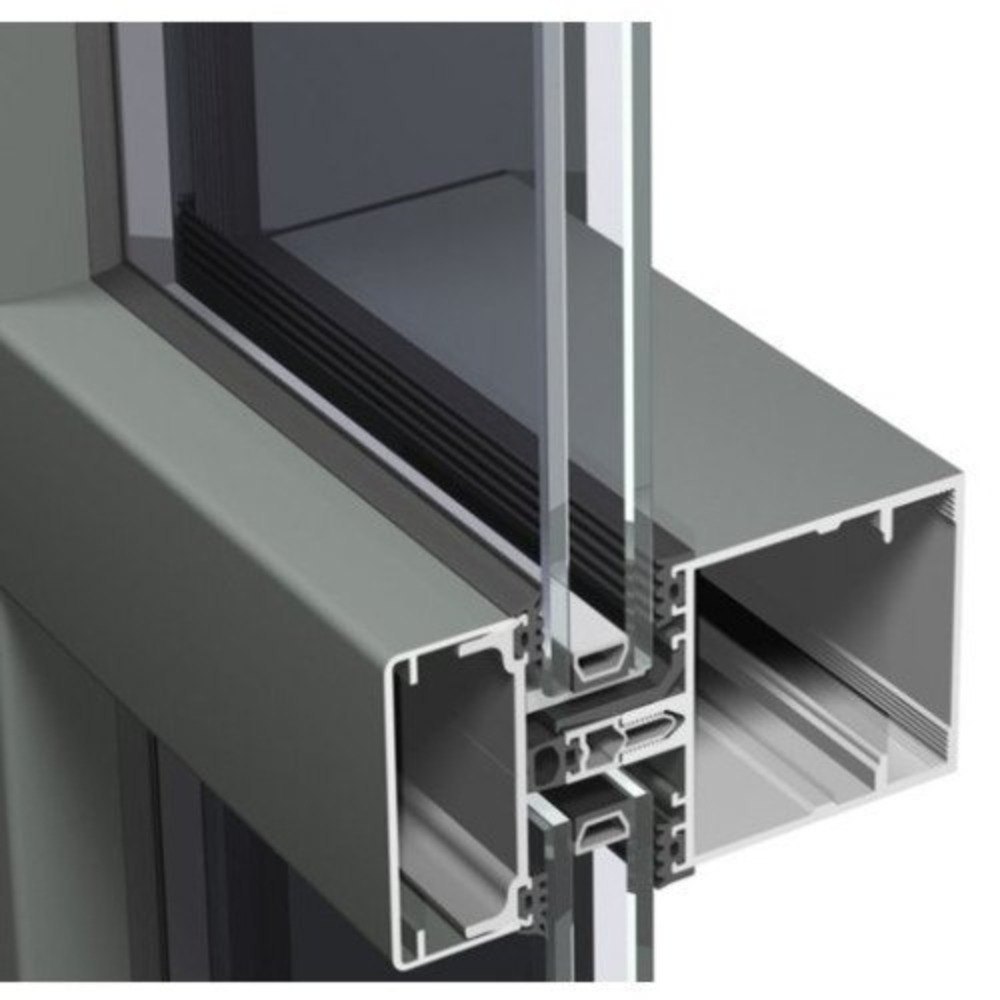
A curtain wall section is a non-load-bearing exterior wall system that encloses a building, typically made of glass, metal, or other materials. It's attached to the building's structure and provides a barrier against weather elements. Curtain walls are not structural, meaning they don't support the building's weight but rather are attached to the main structure.
Key characteristics of a curtain wall:
-
Non-load-bearing:
They are attached to the building's structure and do not support the weight of the building.
-
Exterior cladding:
They form the building's outer envelope, providing weather protection and aesthetics.
-
Various materials:
Curtain walls can be constructed using a wide range of materials, including glass, aluminum, steel, and composite panels.
-
Different systems:
They can be installed using stick-built, unitized, or other systems.
-
Function:
Their primary functions include preventing water and air penetration, resisting wind loads, and providing a weather-tight seal.
Types of curtain wall systems:
- Stick-built: Individual panels are installed on a frame, typically made of aluminum.
- Unitized: Entire sections are pre-fabricated off-site and then installed.
- Rainscreen: A system that uses multiple layers of cladding to shed rainwater and maintain a dry wall cavity.
- Ladder system: Similar to stick-built, but with mullions that can be split and joined for easier prefabrication.
In essence, a curtain wall is a thin, exterior wall that acts as a weather barrier and adds to the building's aesthetic appeal without being a structural component.